
What is the difference between HTTP and HTTPS?
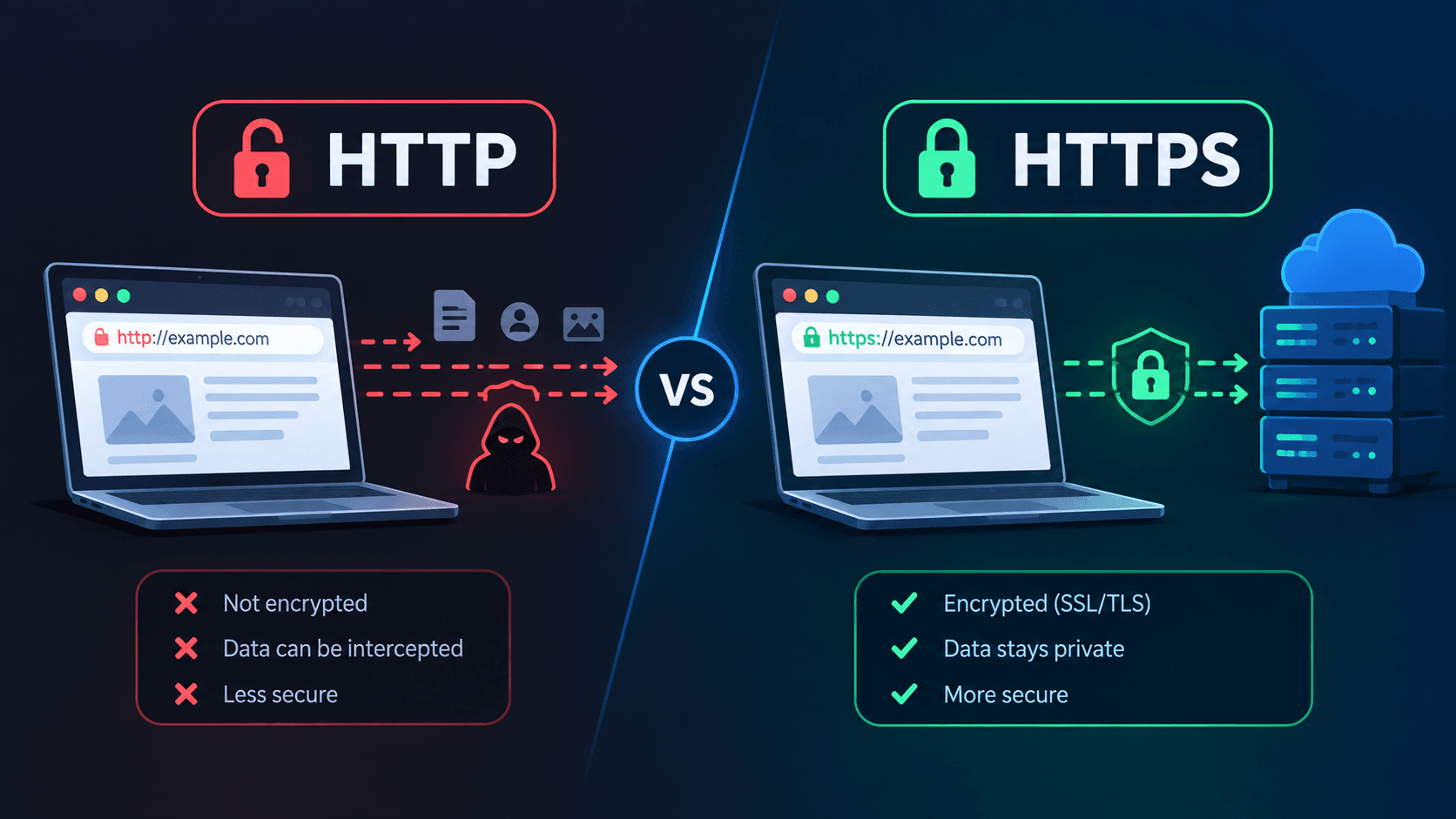
When you visit a website using a browser, you have probably noticed http or https written before its domain. What do they actually do, and what is the difference between them?
HTTP (HyperText Transfer Protocol) or HTTPS (HyperText Transfer Protocol Secure) is basically a set of rules, or a protocol, used to exchange data between your browser and a website's server. And from their Full Forms, you can probably already understand that the main difference between them is security or encryption. Yes, you understood it correctly. That is where the main difference lies.
When you enter any information on a website through your browser, such as your username, email, or password, that information is ultimately sent to the server. With http, this information is transmitted without encryption, meaning the data can potentially be viewed if someone intercepts the connection. In such a situation, if a hacker carries out a Man-in-the-Middle (MITM) attack, they may be able to see the information you have provided. On the other hand, with https, your data is encrypted before being transmitted, turning it into unreadable data so that an attacker cannot easily understand the information.
Modern browsers such as Chrome, Firefox, and Edge generally try to use HTTPS when connecting to websites.
A website can establish a secure https connection when its server has a valid SSL/TLS certificate. The browser verifies the certificate and establishes an encrypted connection with the website. However, if there is a certificate problem, such as an invalid, expired, or untrusted certificate, the browser may display a warning such as “Your connection is not private”, “Not Secure”, or an SSL Error. Depending on the browser and the type of error, the user may be given an option such as “Proceed Anyway” to continue at their own risk.
What is an SSL/TLS Certificate?
SSL (Secure Sockets Layer) and its modern successor TLS (Transport Layer Security) are the technologies used to secure communication between a browser and a server, allowing HTTP to operate securely as HTTPS.
Their job is to encrypt data while it is being transmitted from the browser to the server and to help the browser verify that it is communicating with the intended website rather than an impersonating or fake website. In short, they help ensure that data is transmitted between the browser and server securely, privately, and with the identity of the server verified.